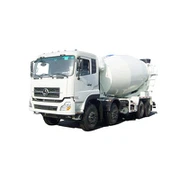

Do you know these common active and passive safety systems?
Aug 31, 2022
How to ensure driving safety? In addition to maintaining a cautious driving habit at all times, it is also inseparable from the assistance of various active and passive safety systems of the vehicle.

▎What is an active safety system and what is a passive safety system?
In simple terms, the safety measures on the vehicle can be roughly divided into active safety measures (to prevent accidents) and passive safety measures (to reduce the consequences of accidents).
That is to say, the passive safety system is a safety design adopted to protect vehicle personnel and people outside the vehicle and reduce the degree of casualties; the active safety system is a safety design adopted to avoid the possibility of accidents.
● Passive safety: refers to the protection of the occupants of the vehicle after an accident. Today, this concept of protection extends to all people and even objects inside and outside the vehicle. Since the international automotive industry has already had very detailed regulations on test details for passive safety, passive safety can be quantified to a certain extent.
Passive safety device refers to passive protection for occupants when a car accident has occurred and the vehicle has been out of control. Through the fixing device, the occupants in the car are fixed in a safe position, and the guidance and collapse of the structure are used to absorb the impact force as much as possible to ensure the safety of the occupants in the car.
● Active safety: The main purpose is to prevent accidents before they happen. Active safety focuses on monitoring the possibility of an accident or the loss of control of the vehicle, and avoiding the occurrence of an accident through a series of interventional vehicle manipulation methods.

With the continuous advancement of technology and intelligence in the automotive industry, a large number of new electronic devices have been effectively used in automotive safety systems, and active safety systems have emerged as the times require.
▎What are the common passive safety systems?

● Safe body: the basis of passive safety systems.
The manifestation of the safety body is in the cab structure. At present, the application of the safety body is divided into soft protection and hard protection.
To put it simply, the soft protection protects the occupants in the vehicle through the collapse of the predetermined structure of the car body, and can absorb most of the impact of the external force through the permanent deformation of the preset wrinkles.
Hard protection mostly adopts concepts such as high-strength materials and sturdy body structure design to ensure that the deformation of the vehicle is smaller in the event of an accident.
● Tire blowout emergency safety device: common in passenger cars, trucks have been tested and a small amount of equipment.

The puncture emergency safety device is especially like a simple track, which is installed in the groove of the wheel hub. The working principle is to install the green island in the wheel groove to fill the inner diameter difference of the rim when the tire blows out, avoiding the possibility of the tire blowing out or falling into the bottom of the groove or breaking away from the rim after the tire blows out or loses pressure. If the tire of the vehicle is punctured, the track can also be supported by the rubber thickness of the decompressed tire to form a rubber pad. Ensure that the vehicle remains under control.
● Safety glass
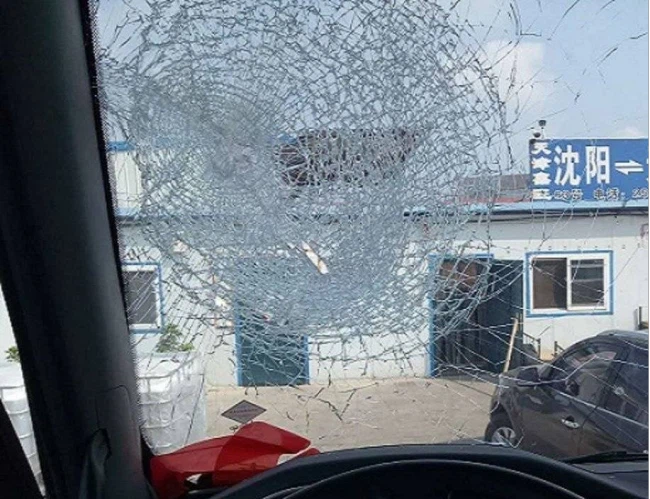
Safety glass is generally divided into tempered glass and laminated glass. When the tempered glass is broken, it is split into many small pieces without sharp edges, which is not easy to hurt people. There are 3 layers of laminated glass. The middle layer has strong toughness and adhesion. When damaged by impact, the inner layer and the outer layer still adhere to the middle layer, which effectively reduces the risk of injury from glass breakage.
● Seat belt

Needless to say, seat belts should be fastened as soon as possible when we get into the car. At the moment of a collision accident, the seat belt will be quickly tightened and then locked to prevent the driver and passenger from leaning forward and effectively protect the safety of the driver and passenger.
● Seat head and neck protection system: protect the head and cervical vertebrae and reduce the impact force.

The WHIPS head and neck protection system is rarely used on trucks, and has a small amount of equipment on some high-end heavy trucks. The principle of the system is that when the vehicle is hit from the rear, the seat head and neck position will be rapidly inflated, and the seat back and headrest of the seat will move horizontally to the rear to reduce the impact.
● Airbag

Airbags are commonly found on light trucks, micro trucks and medium trucks. For example, some high-end heavy trucks such as Scania are also equipped. They are usually installed in the front of the car (the driver's seat), and some vehicles are on the side (the front row of the car and the driver's seat). The rear row) and the three directions of the roof are also equipped. Generally, the airbags installed on the side and other places can reduce the degree of injury of the driver and passenger in the secondary collision due to inertia after the car collides.
● Flat tire emergency safety device: common in passenger cars, trucks have been tested and a small amount of equipment.

Commonly used in heavy trucks, tractor-trailers. The principle is that when the truck encounters a violent impact, in order to reduce the injury to the truck driver, the cab as a whole will move backward a certain distance to reduce because of the cab extrusion deformation on the truck driver to produce injury.
For example, the cab rearward movement technology of some vehicles first absorbs a large amount of impact force through the combination of the front suspension and the lift cylinder, and pulls the car body during the overall backward movement of the cab, so that the cab can move backwards. The displacement is about 0.5m, which extends the contact time of the vehicle and forms a larger buffer displacement distance, thereby ensuring the personal safety of drivers and passengers.
▎Common active safety systems
● ABS anti-lock braking system
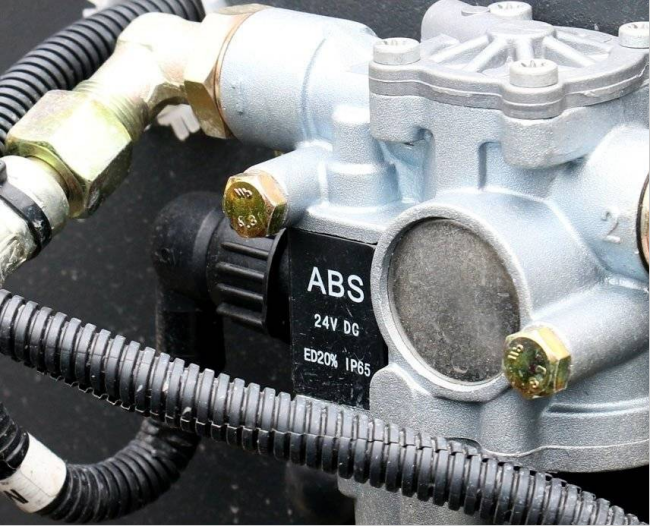
The purpose of installing ABS is to solve the problem of wheel locking during sudden braking, thereby improving the stability of the car during braking and the braking performance of the car under poor road conditions.
● Body Electronic Stability System: There are many names, ESP/ESC/DSC/TCS/VSA, etc., all of which are body electronic stability systems.

Simply put, when we travel in poor road conditions, the electronic stability system will ensure the balance of the body by controlling the movement of the driving and driven tires to achieve a corrected and stable trajectory of the car.
● Anti-collision warning system

This system mainly analyzes driving environment information such as lanes and surrounding vehicles through probes or radars. Once the distance between cars is too close. When there is a possibility of rear-end collision. It can give driving proactive warning in time.
● Lane Departure Warning System: to ensure that the vehicle always keeps driving normally.
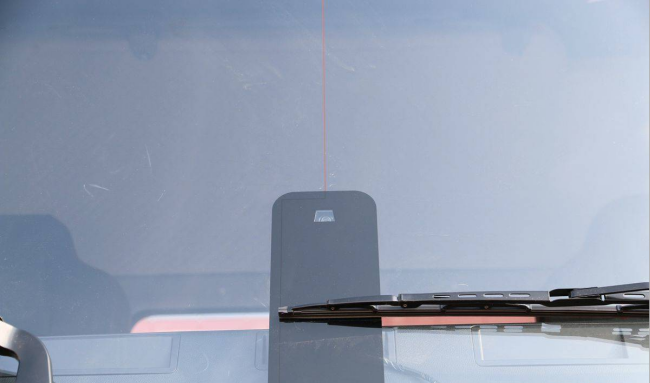
The lane departure warning system will automatically plan the information ahead based on the camera. When the driver is tired and causes the vehicle to travel abnormally or change lanes without turning on the turn signal, it will trigger the lane departure warning.
● ASR drive anti-skid system

Its function is to maintain the directional stability of the car when driving, and to use the longitudinal adhesion between the wheel and the road surface as much as possible to provide the maximum driving force.
● AEB automatic emergency braking system: often work together with anti-collision warning system.

The AEB system uses radar to measure the distance to the vehicle in front or obstacles, analyzes the secondary data, and compares it with the alarm distance and emergency braking distance. When the distance is less than or equal to the safety distance, if the driver does not have any braking operation, the AEB system starts to make the car brake automatically.
● EBD electronic braking force distribution: ABS is further improved.

This system can achieve the braking effect required by the vehicle by adjusting the braking force of the wheels before the ABS works, so as to reduce unnecessary ABS actions, or prevent the wheels from locking when the ABS fails due to a special fault state. , increasing the scope of protection.
● DMS driver monitoring system: monitors the driver's facial information, usually on the A-pillar of the driver's seat.
The purpose of the driver monitoring system is to find that the driver is distracted, playing with mobile phones, tired or sleepy, or even unable to drive. The system will immediately alarm to remind the driver to pay attention.