
SCR blocked ≠ bad urea
Apr 29, 2020

Front end of aftertreatment SCR system catalyst
1. Defects in the structural design of the catalytic converter
In the early production vehicles, the distance between the urea nozzle and the SCR catalyst is often too short. When the urea is sprayed, it reaches the catalyst carrier before it has time to gasify, so crystals are formed. In addition, the welding angle of the urea nozzle mounting base and the catalyst package do not meet the requirements.
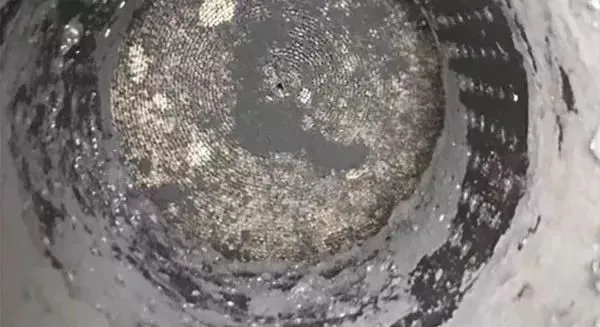
crystals formed
2. Nozzle atomization effect failure or nozzle damage
The post-treatment SCR systems used in common models can be divided into two types: non-air-assisted and air-assisted.
Generally, the working pressure of airless urea injection is relatively high, so the nozzle valve needle is often not closed tightly, and the urea cannot be hydrolyzed at high temperature, so it crystallizes rapidly, such as: Bosch system, Sinotruk first-generation system, Tenneco system, etc.;

The urea nozzle with air assist is normally open type, and its atomization is assisted by air pressure. If the urea pump air pressure line failure will cause poor spray atomization, resulting in crystalline blockage, for example: Imtech, Cummins Ecofit, Weifu Lida, etc.
3. The urea dosing pump is not completely emptied after the vehicle is extinguished
Since there is liquid left in the urea pump and piping after the vehicle stops working, the vehicle needs to be emptied after the ignition is switched off to prevent crystallization or freezing.
4. The vicious circle caused by shielding the urea system
Take the Tenneco system as an example, Tenneco's urea pump liquid circuit is a ring, the urea pump starts to run immediately after starting to let the urea solution dissipate heat from the nozzle, so when you shield the urea system from working, the nozzle will be in a high temperature environment.
Urea pumps and lines that do not run for long periods of time will crystallize and block due to the evaporation of the liquid water left inside.

Urea Pump
5、Urea pump cartridge is not replaced regularly
All urea pumps have filters or filter elements, which must be cleaned or replaced regularly, otherwise it will lead to clogging or breakage over time so as to lose the filtering function.
If you accidentally bring dust into the irrigation when adding urea, the filtering function fails and it is easy to cause blockage of the nozzle, generally the nozzle has 3-4 holes, if one or two holes are blocked there is bound to be poor atomization and cause crystallization.

Urea pump filter element
6. Performance failure or damage of other external sensors and actuator elements
For example: when the exhaust temperature sensor has a performance failure, the actual exhaust temperature may be 100 degrees Celsius, but the sensor feedback to the computer is 200 degrees Celsius, which will cause the system to inject urea in advance. The urea injection cannot be hydrolyzed and gasified at low temperature, and crystals will be formed at the catalyst carrier, which will form a hard urea crystal compound over time.

Other external sensors and actuator elements
7. The use of inferior diesel fuel in the vehicle and the poor working environment cause the catalyst to fail
The catalyst of the SCR system has high technical requirements for the sulfur content in diesel. The sulfide formed at high temperature has irreversible damage to the catalyst, so once the catalyst fails, it will cause the exhaust gas to exceed the standard and limit the engine power output.