


How to judge the failure of the aftertreatment urea pump and urea nozzle
Feb 04, 2019
What is the function of the nozzle?
Nozzle is a key component in many kinds of spraying equipment, plays an important role. Nozzles are widely used, so there are many classifications of nozzles.
For post-processing maintenance, the most common faults are concentrated on the urea nozzle and urea pump. Here we sort out the fault characteristics of the post-processing urea pump and urea nozzle:
1. Do not burn urea
Note: During the normal use of the vehicle, it is found that the amount of urea has not changed.
2. Insufficient vehicle power
Description: When the vehicle is running, the engine power is insufficient, which brings the driver a feeling of powerlessness of the whole vehicle.
3. Urea pump does not work
Description: When the vehicle is running, the urea pump does not work properly.

4. Urea light is always on
Description: When the vehicle is running, the urea fault indicator on the instrument is always on.
5. Urea consumption is large
Explanation: Urea consumption value is greater than the value of 100L diesel consuming 10L urea.
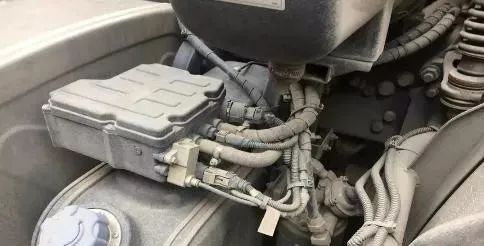
6. Leakage and crystallization
Description: There are leaks and crystals on the urea pump.
7. Internal failure
Description: Some internal components of the urea pump system have failed, resulting in a fault in the system.
8. Unable to build pressure
Description: When the urea pump works abnormally, the detection software shows the fault information as pressure building failure.
9. Suction back is not smooth
Explanation: The process of pumping back the residual liquid of the urea pump after stopping is not smooth.

10. Nozzle does not work
Description: The nozzle does not spray urea when the after-treatment system is working.
11. Nozzle blockage crystallization
Description: Urea at the nozzle is blocked for a long time, resulting in crystallization.
12. Nozzle leakage
Description: When the nozzle is working, a small amount of urea flows out from the edge.

Nozzle can be divided into two categories, one is the air nozzle, the market is mainly represented by the Imtech nozzle, the other is the airless nozzle is mainly represented by Bosch nozzle.
Functionally speaking, the nozzle mainly plays a pressure-holding and atomization effect; the pressure-holding pressure at the nozzle is usually around 3.5 kg, and the pressure at the airless nozzle is usually in the range of 4-9 kg; the size of the open area of the air nozzle directly affects whether the vehicle can spray urea normally.

Usually some common problems such as poor atomization effect of the urea dosing pump, or the pressure in the urea dosing pump is too high, a large number of urea crystals in the exhaust pipe, etc., all have a great relationship with the nozzle; The injection angle of urea on the nozzle will also have a certain influence on the injection of urea; usually, the opening angle of the nozzle is about 2-5 degrees; the angle will have a certain effect on the burning of urea more or less.
The most common failure phenomenon of airless nozzles is crystallization or the injection valve is stuck and cannot be opened. To prevent the nozzle from crystallization or blockage, more maintenance should be given to the after-treatment.


