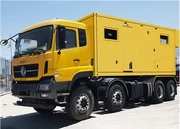

Specific power: a key indicator for measuring vehicle power performance
Sep 05, 2025
1. What is specific power?
Power-to-weight ratio (PWR) is the ratio of a vehicle's maximum net engine power to its maximum gross vehicle mass, typically expressed in kilowatts per ton (kW/t) or horsepower per ton (PS/t). The formula is:
PWR = Maximum net engine power / Maximum gross vehicle mass.
For example, if a vehicle has a 150 kW engine and a gross vehicle mass of 10 tons, the PWR is 15 kW/t. A higher PWR value indicates greater power per unit mass, resulting in better acceleration, gradeability, and other performance.
2. Why is specific power such an important automotive metric?
Specific power is one of the core indicators for measuring vehicle dynamics. Its importance is reflected in the following aspects:
Power: Vehicles with high specific power accelerate faster and overtake more easily, especially at high speeds or on slopes.
Safety: Sufficient power enables vehicles to respond promptly to emergencies, such as merging into lanes at high speeds and making emergency maneuvers, thereby reducing the risk of accidents.
Economy: Vehicles with too low specific power may experience prolonged high engine, increasing fuel consumption and emissions.
Regulatory requirements: Countries set minimum specific power standards for commercial vehicles (such as trucks and buses) to ensure road safety.
3. What is China's standard specific power?
China has established strict specific power standards for commercial vehicles (based on national standard GB 7258, "Technical Conditions for Motor Vehicle Operation Safety"):
For trucks and buses: For vehicles with a maximum gross vehicle mass greater than 3.5 tons, the specific power must not be less than 5.0 kW/t.
For hazardous materials transport vehicles: The requirements are higher, generally requiring a minimum of 6.0 kW/t.
For passenger cars (private vehicles): There is currently no mandatory lower limit, but the industry generally agrees that power performance below 50 kW/t is poor, while high-performance vehicles can reach over 100 kW/t.
These standards are intended to prevent vehicles from underpowered and impacting road efficiency and safety.
4. What are the serious consequences of excessively low specific power?
Excessively low specific power isn't just a driver experience issue; it also poses serious concerns regarding safety, economy, mechanical lifespan, and regulatory compliance. The consequences are primarily manifested in the following areas:
Serious Safety Hazards (The Core Consequence)
The most immediate and dangerous consequence of insufficient specific power is a severe impairment of the vehicle's dynamic performance, making it unable to safely integrate into modern traffic flows.
Loss of Acceleration and Merging Ability
Scenario: On a highway ramp, a vehicle must quickly accelerate to a speed comparable to that of the main lane (typically no less than 80 km/h) to merge safely.
Consequence: Even with the accelerator pedal fully depressed, a vehicle with insufficient power will only accelerate slowly. This can force drivers to merge at a low speed at the end of the ramp or stop in a diversion area to wait, potentially causing a rear-end collision with a higher-speed vehicle on the main lane, resulting in a serious traffic accident. Similarly, overtaking on national highways or city roads requires a prolonged period of occupying the oncoming lane, making the process lengthy and dangerous.
Difficulty Climbing and Starting on Hills
Scenario: Driving in mountainous areas, on the slopes of underground garages, or on bridge approaches.
Consequence: The vehicle's speed will continue to decrease, and even downshifting will be unable to maintain speed. On slopes, insufficient power may cause the vehicle to stall, stall, or even roll away, leading to loss of control and collision with vehicles behind or obstacles. This has been a major cause of serious accidents for heavy trucks.
The vehicle's maximum speed is limited, becoming a "mobile roadblock."
Scenario: Driving on a highway.
Consequence: The vehicle's top speed may barely reach 80 km/h or even lower, failing to meet the highway's minimum speed limit (typically 60 km/h). This forces traffic behind it to swerve, severely disrupting traffic flow and increasing the risk of collisions and accidents.
Poor Emergency Response Ability
Scenario: When urgently avoiding an obstacle, animal, or accident ahead.
Consequence: Power is fundamental to safety. Evasion maneuvers often require acceleration to quickly escape the danger zone. An underpowered vehicle will appear clumsy and sluggish, unable to execute effective evasive maneuvers and missing the optimal opportunity to escape.
Huge Economic and Efficiency Costs
Fuel consumption is increasing, not decreasing
A common misconception is that smaller engines are more fuel-efficient. In reality, operating a small engine under sustained excessive load (for example, by pressing the accelerator for extended periods) far exceeds its most efficient operating range, resulting in incomplete fuel combustion. Consequently, actual fuel consumption is higher than that of a larger engine with moderate power operating within its most efficient range.
Extremely low transportation efficiency
Time is money. Trucks with underpowered engines take longer to complete the same distance, resulting in fewer trips per unit time, a higher spread of driver labor costs, and a significant drop in overall profitability. In the modern logistics landscape of time-sensitive delivery, these vehicles are uncompetitive.
Serious mechanical loss and reliability issues
Chronic engine overload dramatically shortens engine life. Continuously operating an engine at high speed and high load can lead to excessive internal temperatures, accelerated oil degradation, and increased wear on key components like pistons, cylinders, crankshafts, and bearings. This significantly shortens the time between engine overhauls or scrapping.
Overburdened Transmission System
Transmission components like the clutch, transmission, and drive axle are required to transmit greater torque, and are also subject to overheating and excessive wear. The risk of clutch corrosion and transmission gear damage is much higher than in a normal vehicle.
The cooling system is under immense pressure.
High engine loads generate significant heat, placing a severe strain on the cooling and lubrication systems. In summer or when driving uphill, this can easily lead to problems like coolant boiling and oil temperature alarms, further increasing the risk of mechanical failure.
Environmental and Regulatory Risks
Excessive Emissions
When an engine is operating under overload conditions, incomplete fuel combustion can produce large amounts of carbon monoxide (CO), hydrocarbons (HC), and particulate matter (PM). These emissions are significantly above standards, causing greater environmental pollution. Such vehicles will fail the annual exhaust gas test.
Violation of National Mandatory Standards
As mentioned earlier, China has clear minimum specific power requirements for commercial vehicles (e.g., 5.0 kW/t). Vehicles with specific power below this standard are considered substandard products and cannot be registered, pass annual inspections, or obtain road transport permits. Once on the road, they face penalties and vehicle seizure by traffic control authorities.
Underpowering an engine is more than just a matter of driving slower. It's a systemic risk factor that can trigger a series of negative chain reactions, from active safety failures to mechanical lifespan reduction, from poor operating economics to environmental violations.
Therefore, whether in vehicle manufacturing, procurement, or use, sufficient attention must be paid to specific power. When purchasing a vehicle (especially a truck or bus), be sure to check whether its specific power meets the standards. During daily driving, if the vehicle's power is seriously insufficient, prompt inspection and maintenance should be performed. Safety and efficiency begin with attention to detail.
> Note: The standards in this article refer to current Chinese regulations. The actual data shall be subject to the latest version of the national standards.