
How to solve the problem of vehicle air conditioning not cooling?
May 21, 2025
Imagine how miserable drivers would be if the air conditioner failed to work in the hot summer. However, if the vehicle's air conditioner is not well maintained, it is easy for it to lose cooling capacity or even "go on strike" directly.
Especially since trucks are not as airtight as cars and SUVs, they require a higher cooling capacity. If the air conditioner doesn't work well, drivers will feel extremely hot in the truck cab. So, what should we do if the air conditioner doesn't cool us?
For most people, the first thing they think of when the air conditioner is not cooling is to add fluorine. But according to automotive experts, the air conditioning pipes are generally sealed, and the chance of fluorine leakage is not high. Moreover, there is usually an observation hole on trucks, so you can see at a glance whether there is a lack of fluorine.
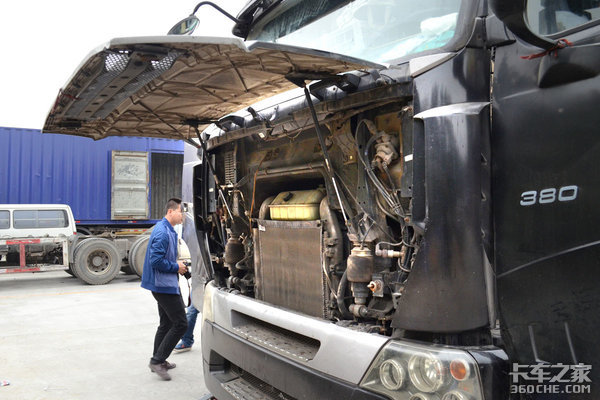
When we open the hood, we can see a huge radiator and a bunch of pipes. There are two very conspicuous silver pipes in it, and we can also find blue caps on the pipes, usually one with "H" and the other with "L", which are the air conditioning pipes.
Following the pipeline, we can find such an observation window. When the air conditioner is turned on, we can see the refrigerant inside, which is what we often call "fluorine" flowing through this observation window. Generally, if there is fluorine flowing inside, there is basically no lack of fluorine.

So, if there is no lack of fluorine, why does the air conditioner not cool well? We have to start with the principle of air conditioning. Rather than saying that the air conditioner is "cooling", it is better to say that it is moving heat, moving the heat in the room to the outside. The "fluorine" we often talk about vaporizes in the evaporator of the indoor air conditioner, absorbs the heat around it, and blows out cool air. After passing through the compressor, it liquefies outside and releases the heat. In the meantime, if the "fluorine" does not flow or the heat cannot be dissipated, it may cause the air conditioner to fail to cool.
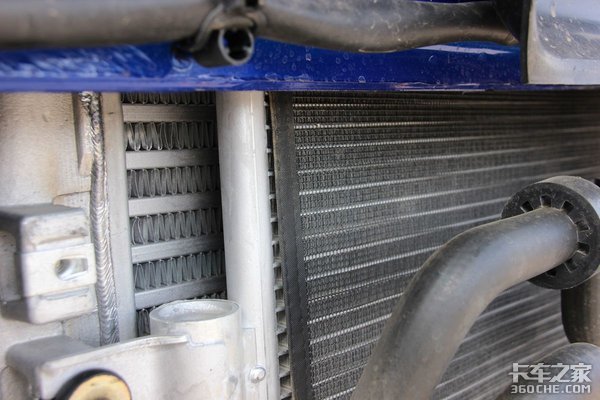
You should know that in order to achieve the best heat dissipation effect, the radiator used in the vehicle is equipped with countless tiny fins. The function of the fins is to maximize the heat dissipation area, but its disadvantage is that it is easy to get stuck with some foreign objects. Especially in spring, poplar and willow catkins are simply a nightmare for radiators.

These foreign objects are blown onto the radiator, just like a layer of quilt is covered on the radiator. The picture above is a radiator covered with poplar and willow catkins. These objects covering the radiator prevent the heat from dissipating, and naturally the air conditioner cannot cool well. Therefore, regular cleaning with an air gun or water gun becomes the best choice. Of course, when cleaning, do not let the water pressure or air pressure be too high, otherwise the fins will be deformed and the heat dissipation capacity will be affected.
In addition, the air conditioner needs to have a compressor running continuously. After the compressor has been working for a long time, debris will flow out due to wear. If this continues for a long time, this debris may block the pipe where the "fluorine" flows, causing the air conditioner to fail to cool. In this case, maintenance is required.

In fact, generally speaking, if the air conditioner is not cool, it is basically because there is a problem with the radiator, which can be basically eliminated by cleaning it.