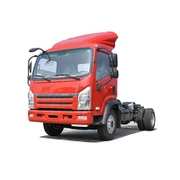

Is the acceleration performance of a vehicle determined by power or torque?
Apr 24, 2025
In a vehicle, torque reflects the amount of rotational force of the engine output shaft. The greater the torque, the greater the power of the engine output, and the better the vehicle's climbing ability, starting speed and acceleration.
For example, if the engine is compared to a person, torque is equivalent to the person's explosive power. For example, when the vehicle starts or needs to accelerate suddenly to overtake, a vehicle with large torque can often respond more quickly. The greater the torque, the stronger the power output of the engine at low speed, which is very important for quick response when driving in the city and overtaking.
Power, on the other hand, refers to the work done by an object per unit time. For a vehicle engine, power represents the total amount of energy that the engine can produce per unit time, measured in kilowatts. The greater the power, the more energy the engine can output per unit time, and the higher the maximum speed it can reach. Think of power as a person's endurance, which determines the speed at which that person can maintain sustained movement.
It is easy to understand with an example. There are 100 bricks to be moved from A to B. C and D are responsible for moving them. C is stronger and can move 5 bricks at a time, while D is weaker and can only move 2 bricks at a time. By analogy with trucks, it can be seen that C has a greater torque than D. However, it takes C five minutes to move one trip, while D only needs one minute to move one trip. Although D moves less at a time, his speed is faster. In the end, D moves more in the same amount of time. By analogy with trucks, it can be seen that D has a greater power and does more work per unit time.
So, does the acceleration performance of a vehicle depend on power or torque? In fact, this is not a simple either-or question. They both play a vital role, but their impacts are different.
Torque plays a more critical role in vehicle starting and low speed stages. This is because at low speeds, the engine's power output is relatively low, and torque can quickly play a role, allowing the vehicle to quickly obtain greater power and achieve rapid starting and acceleration.
Power has a greater impact on the vehicle's top speed and sustained acceleration capabilities. A more powerful engine can continuously output more energy at a higher speed, thereby driving the vehicle at a higher speed. Vehicles with high-power engines generally have a higher top speed and more stamina when accelerating. When driving at high speeds or when long-term acceleration is required, the power has a decisive influence on the vehicle's acceleration performance.
For example, there are two trucks, one with high torque but relatively low power, and the other with high power but relatively low torque. In a short-distance acceleration race, such as only 20 meters, or a race on a large uphill road, the truck with high torque will rush out first and take the lead. But if it is a longer-distance acceleration or continuous acceleration on the highway, the truck with high power has more advantages.