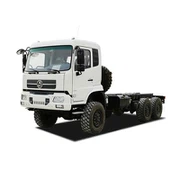

Why do trailers also need to be equipped with EBS?
Dec 12, 2024
When it comes to the issue of EBS, many truck drivers have questions: Can't EBS be equipped on the tractor head? Why do non-powered trailers also need to be equipped with EBS?
In fact, the main reason why trailers need to be equipped with EBS is to be able to coordinate braking with tractors equipped with EBS to further improve driving reliability and safety.
In simple terms, EBS can make different controls for each wheel. For example, when the vehicle brakes on a slippery road, the driver steps on the brake, and the system will release the brake pressure according to the driver's braking force to achieve the best braking effect. If a wheel locks or slips due to insufficient friction, the EBS system will reduce the brake pressure for that specific wheel to ensure balanced braking force between each wheel.
The trailer is usually braked earlier than the tractor, because the connection between the trailer and the tractor determines the particularity of braking. Once the trailer or the tractor brakes out of sync, dangerous situations are likely to occur.
The emergence of EBS can solve this problem. If both the tractor and trailer are equipped with EBS system, when the system detects that the braking of the tractor and trailer are not unified, EBS will adjust the braking distribution to achieve the effect of unified braking.
For example, when the driver steps on the brakes to apply the brakes, if the tractor starts to skid, the EBS system will detect this and instantly release the tractor brakes while distributing the braking force to the left and right wheels of the trailer to balance the vehicle's driving and fully ensure the safety of the driver and the vehicle.
The EBS system has not only been improved in terms of safety performance, but also has been fully expanded in terms of functionality. Therefore, EBS is not just a system with a single function, but an open vehicle control platform.
EBS can be integrated and work together with other electronic systems to derive a variety of auxiliary functions, including body stability control (ESC or ESP), anti-rollover system (RSC), drive anti-skid (ASR), hill start assist (HSA), etc.
In other words, EBS can be said to be a major innovation in vehicle braking systems. In addition to its own performance and functions, more importantly, it provides a basic platform for various auxiliary systems that will appear in the future.