


Differential locks on trucks can be of great use when used correctly
Feb 14, 2023
When a truck encounters a difficult situation to get out of, what can be done? A differential lock can make a big difference. What do you know about differential locks on trucks?
When turning a vehicle, the inside wheel travels less distance than the outside wheel and the two wheels do not have the same speed. If the left and right wheels were connected by a single axle, this would cause the two wheels to fight each other when turning, which would not only make steering unstable, but would also make the tyres slide when rolling, accelerating tyre wear. This is why engineers invented the differential, a component that allows the vehicle to work steadily in corners, uneven heights, etc., and reduces the wear and tear on the gear mechanism.
Inter-wheel differential locks, inter-axle differential locks, are there many different types of differential locks?
Inter-wheel differential lock
As the name implies, this is the device used to lock the differential so that it loses its differential effect and enables a hard connection between the two wheels. Vehicles with only one drive axle are only equipped with an inter-wheel differential lock.
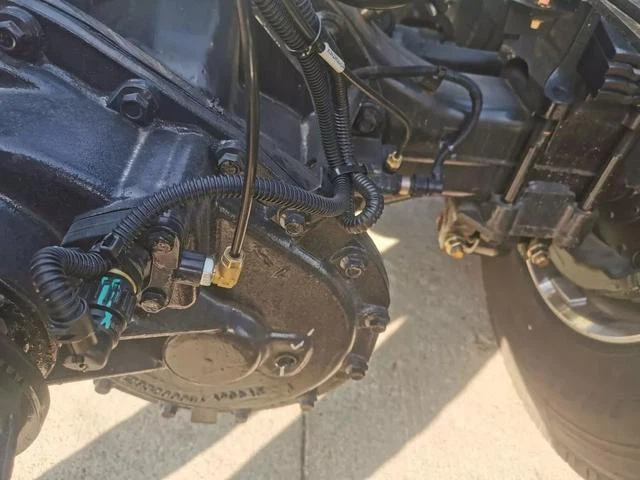
Inter-axle differential lock
On the 6X4 model, the rear axle is equipped with a twin drive axle. In addition to the two inter-wheel differential locks, a set of inter-axle differential locks is also fitted. It serves to lock the differential on the through axle, allowing a hard connection between the two drive axles, allowing both drive axles to turn simultaneously and enhancing the vehicle's ability to pass on muddy, slippery roads.
The current common differential lock is an electronically controlled air scheme, where a button on the dashboard is an electronic switch and a solenoid valve located in the axle housing is energised to control compressed air to lock the differential lock when the switch is pressed. In what circumstances do we need to use a differential lock?

If the vehicle has insufficient climbing power when heavily loaded, we can press the inter-axle differential lock switch to enable the inter-axle differential lock, at which point the truck's two drive axles are connected to operate as one unit at the same time, with drive to all four wheels, increasing the truck's driving capacity.
If one of the wheels slips in the mud, we can press the inter-wheel differential lock switch to activate the inter-wheel differential lock, then the left and right wheels of the truck will combine to run as one unit at the same time, the power will be distributed to the non-slip wheel, and the truck can continue to drive.
If the road conditions are particularly bad and the truck is heavily loaded, in order to avoid a sudden loss of drive causing danger, it is usually necessary to hook up the inter-axle differential lock and the inter-wheel differential lock at the same time, so that the four driving wheels of the truck are combined into a single synchronous operation and the truck will not lose drive even if one of the wheels has insufficient traction.
Can we use the differential lock when turning the vehicle?
Truckers need to be aware that with the inter-wheel differential open, the vehicle cannot be forced to turn, otherwise the locking mechanism will be damaged. With the inter-wheel differential lock off and the inter-axle differential lock on, it is possible to turn, as the inter-axle differential lock acts to cope with the speed difference between the middle and rear axles and does not affect turning.
The differential lock must only be used when the vehicle is stationary or at low speeds, otherwise it can cause serious damage to the differential and other components.
In order to prevent damage to the differential lock, whether it is an inter-wheel differential lock or an inter-axle differential lock, the differential lock switch needs to be pressed back on in time after the vehicle has finished getting out of trouble (the indicator light goes out, indicating that the differential has been disengaged).


