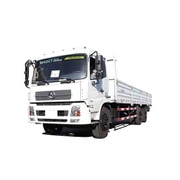

What are the design requirements for flatbed trailers?
Nov 28, 2025
1. Drawbar Flatbed Trailer
A drawbar flatbed trailer is a flatbed trailer with at least two axles. One axle can turn 180 degrees; it is connected to the flatbed trailer via a drawbar that moves angularly; the drawbar can move vertically and is connected to the chassis, therefore it cannot bear any vertical force. Semi-trailers with concealed ground supports are also considered drawbar flatbed trailers. A general-purpose drawbar flatbed trailer is a flatbed trailer used for transporting goods in an open (flatbed) or enclosed (box) cargo space.
2. Heavy-duty flatbed trailers
Flatbed trailers are constructed with heavy-duty steel and are generally used for transporting large industrial goods. They can be used for in-plant cargo handling or for transporting goods on roads during transit. Heavy-duty flatbed trailers are particularly suitable for short-distance transshipment, warehouse relocation, machinery transport, logistics, and production line unloading operations for heavy products.
Flatbed Trailer Design Requirements
1. Rated load capacity: The load capacity can be designed according to requirements.
2. Load-bearing area: The load-bearing width and length of the flatbed trailer can be designed according to requirements.
3. Tire type: Solid tires or pneumatic tires. Solid tires are wear-resistant and do not puncture, while pneumatic tires offer higher speeds.
4. Other configurations of the flatbed trailer, such as: dual traction, guardrails, box-type design, braking system, shock absorption system, canopy, rope net, etc.
Advantages of Flatbed Trailers
1. High transportation efficiency.
2. Low manufacturing cost.
3. Low fuel consumption.
4. Simple structure, convenient maintenance, and low maintenance costs.
5. Can be detached and attached for extended use as a storage unit.