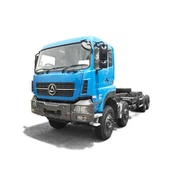

Precautions for the use of concrete mixer trucks in the rainy season
Jul 24, 2024
Among the truckers, the ones who dislike the rainy season the most are probably the drivers of concrete mixer trucks. Because once it rains, they basically have to stop working.
As the concrete is under the rain and snow, the transportation and grouting process will be affected in one way or another. In minor cases, the quality of concrete will be affected, and in serious cases, the concrete will be scrapped, which may also lead to serious accidents. So, how should the truckers of cement mixer trucks deal with the rainy season?
When working in the rainy season, you should have a detailed understanding of the weather conditions before you go out; and you should carefully check and troubleshoot the vehicle's engine, chassis, tires, brakes, windshield wipers, air conditioning, hydraulic system, mixing device, etc. to ensure that it can work properly.
The cab should also always have rain-shielding equipment in case of emergency. At the same time, make sure there is enough water in the tank and bring water reducing agent with the truck to facilitate the mixing of concrete.
Before starting the vehicle, make sure the tank of the mixer truck is in the stopped position to prevent damage caused by excessive pressure on the reducer as well as the hydraulic system after the vehicle is started.
If you encounter rain or snow on the way of transportation, don't be in a hurry and don't move forward at high speed for fear of affecting the quality of concrete. The first thing to do is to slow down and ensure your personal safety.
For roads that are not hardened, it is best not to venture forward or you may get stuck in the mud. When encountering a waterlogged road, you should make sure it is safe before passing.
Turn on the headlights, fog lights and double flashers in time according to the situation to warn passing vehicles and increase the safety factor.
Reduce the traveling speed before turning, slow down the speed of the tank, and make a big turn as much as possible. Because of the high center of gravity of the mixer truck, it is easy to roll over.
When driving out of the waterlogged road you can lightly step on the brake pedal, so that the water on the brake pads and brake discs can be evaporated in time to restore the braking effect.
If the rain is heavy, in order to ensure driving safety it is best to choose a sheltered place to avoid the rain and ensure the quality of concrete.
You can't be careless when you arrive at your destination, the site is slippery after the rain, make sure it's safe before moving forward.
After unloading, the mixing tank should be carefully rinsed to prevent the concrete from sticking to the tank, which can not be removed after solidification.
Rain tends to corrode vehicles, and small parts such as electrical circuits and lights may also be affected. After the rain stops, you should carefully check some parts that are easily affected by rain, such as: instrumentation, handle, universal shaft, hydraulic system, etc.. If you find any anomalies, you should repair and maintain them in time to ensure the normal and safe operation of the mixer truck next time.