


How to choose tire tread for different wheel positions
Mar 04, 2024
I. Transverse Tread Tires
The transverse pattern is a pattern arranged according to the vertical plane of the tire circumference, which is broken in the longitudinal direction and continuous in the transverse direction, and has strong passability.
The transverse tread pattern is arranged perpendicular to the circumference of the tire, with interrupted longitudinal grooves and continuous transverse grooves, providing strong traction capability.
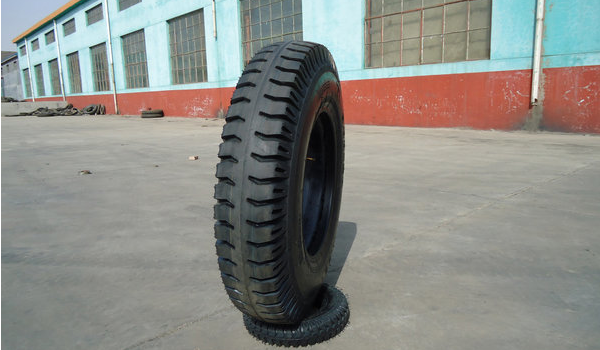
II. Longitudinal tread tires
Longitudinal tread patterns are arranged along the circumference of the tire, with interrupted transverse grooves and continuous longitudinal grooves. They increase lateral friction during vehicle turns, enhancing resistance to skidding.
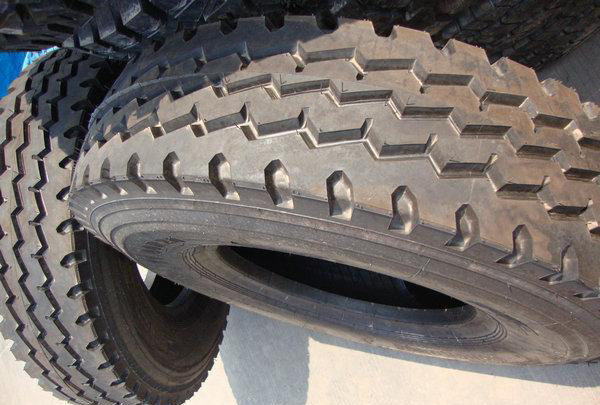
III. Mixed Tread Tires
This type of tread pattern is actually an organic combination of longitudinal and transverse patterns. The transverse groove pattern on the tire is interrupted and distributed by longitudinal grooves, ensuring sufficient traction capability while also providing certain drainage capacity. It's worth mentioning that the transverse groove pattern can also help break the water film, further enhancing drainage capacity.

▎ So what kind of tires should you choose for different wheel positions?
1. Steering tires
The steering tires generally feature four main longitudinal tread patterns, reducing resistance when the truck is in motion. During cornering, special treatment on the tire shoulder is applied to further enhance steering and anti-skid capabilities by increasing friction on the outer side of the tire.
2. Special tires for trailers
As the name suggests, trailer-specific tires are designed specifically for trailers. Their tread patterns typically consist of four main longitudinal patterns. However, their shoulder area is larger than other tire types, enhancing resistance to lateral abrasion. Moreover, the structure of the steel belt in trailer tires is highly specialized, providing puncture resistance. They also exhibit excellent resistance to squeezing and impact forces.
3. Drive tires
Drive tires represent an advancement in comprehensive capability. They typically feature four or five longitudinal grooves combined with dense transverse grooves to form a block-type structure. These block patterns significantly enhance the tire's traction, thereby increasing the vehicle's overall load-carrying capacity to a certain extent. Additionally, due to this special structure, the tire's service life is also prolonged.
Among the driving tires, there are also unidirectional pattern tires and symmetrical pattern tires, the former need to pay attention to the direction of mounting when assembling; the latter, as the name suggests, has a symmetrical tread pattern, with the center groove of the tread as the centerline, and the tread pattern on both sides is the same or similar.
4. Universal tires
Universal tires mainly have three or four longitudinal grooves, among which the use of three longitudinal grooves on trailers is acceptable, but installing them on steering wheels will reduce the ability to resist skidding. Four longitudinal grooves can be used on steering wheels, but when used on trailers, the effect is very poor.
Although there are various patterns of tire treads, drivers can analyze the working routes of their trucks and choose a more suitable and reasonable tire tread.


