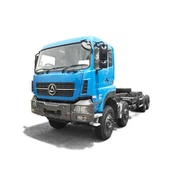

Winter Battery Maintenance Guide for Electric Trucks
Dec 08, 2023
1. Carry out a full inspection and maintenance of the battery, this needs to be carried out when the vehicle is returned to the after-sales service place.
2. Check whether the lights and horns of the whole car are normal.
3. Pay attention to check the tire pressure, and often clean up the inclusions in the tire tread. In the winter tires will become hard and brittle, more prone to leakage and puncture than in other seasons.

Electric air pump▲
4. Check and replenish the brake fluid; adjust the brake system to ensure that the brakes are not weak. Some electric logistics truck models using air brakes also need to check the brake air circuit and clean the water inside the cylinder in advance to prevent the brake air circuit from freezing and causing the brake system to fail.
5. Check whether the bearings have abnormal noise, and replace the bearings with hidden danger in time.
6. Check the vehicle steering for abnormal noise or stuck; adjust the vehicle front beam.

7. Regularly check the battery wires and terminals for looseness and corrosion.
In winter, the component of pure electric logistics vehicles most affected by temperature is the battery. This is closely related to the vehicle's range or driving range.
When temperatures drop, the viscosity of the electrolyte increases, impeding ion movement and reducing diffusion capability. The resistance of the electrolyte also increases, resulting in increased electrochemical reaction resistance. Additionally, low temperatures can decrease the utilization rate of the negative electrode's active material, leading to a decrease in battery capacity.

At a temperature of 25 degrees Celsius, the battery capacity is 100%. Within the temperature range of 10 to 25 degrees Celsius, for every 1-degree decrease in temperature, the battery capacity decreases by approximately 1%. At 10 degrees Celsius, the battery capacity is approximately 85%. Within the temperature range of -20 to 10 degrees Celsius, for every 1-degree decrease in temperature, the capacity decreases by approximately 1.5%. At 0 degrees Celsius, the battery capacity is approximately 70%, and at -20 degrees Celsius, the battery capacity is approximately 44%.
Additionally, the impact of temperature on battery capacity becomes more significant with higher discharge rates. Therefore, vehicles that frequently climb slopes will experience a more noticeable reduction in driving range in colder temperatures.
Battery degradation leads to reduced battery life and longer charging times. These issues are limited by the characteristics of the battery and cannot be avoided at present. But we can reduce the impact of winter on the performance of electric vehicles through a few usage precautions.
When an electric truck has just been used, the battery temperature is typically within an appropriate range, ensuring both charging speed and battery performance are within normal parameters. At this point, charging the vehicle can improve charging efficiency and reduce charging time.
Before heading out, you can recharge the battery again. This helps in warming up the battery to reach its optimal operating temperature. Vehicles equipped with battery thermal management systems can also utilize charging to achieve this. It is advisable to depart with a full charge to ensure optimal driving range.
Plan your route in advance and estimate the distance, ensuring you have sufficient buffer for the return journey. In winter, the range of a pure electric logistics vehicle typically decreases by around 10% to 20%. Additionally, the use of interior heating in winter can further reduce the driving range by approximately 20 kilometers. Therefore, when using the vehicle in winter, it is advisable to reserve slightly more battery capacity compared to the summer.